Services
IoT Hardware & PCB Design
Industrial-grade electronics design, from schematics and multi-layer PCB layout to prototypes ready for production.
01Overview
What this service covers
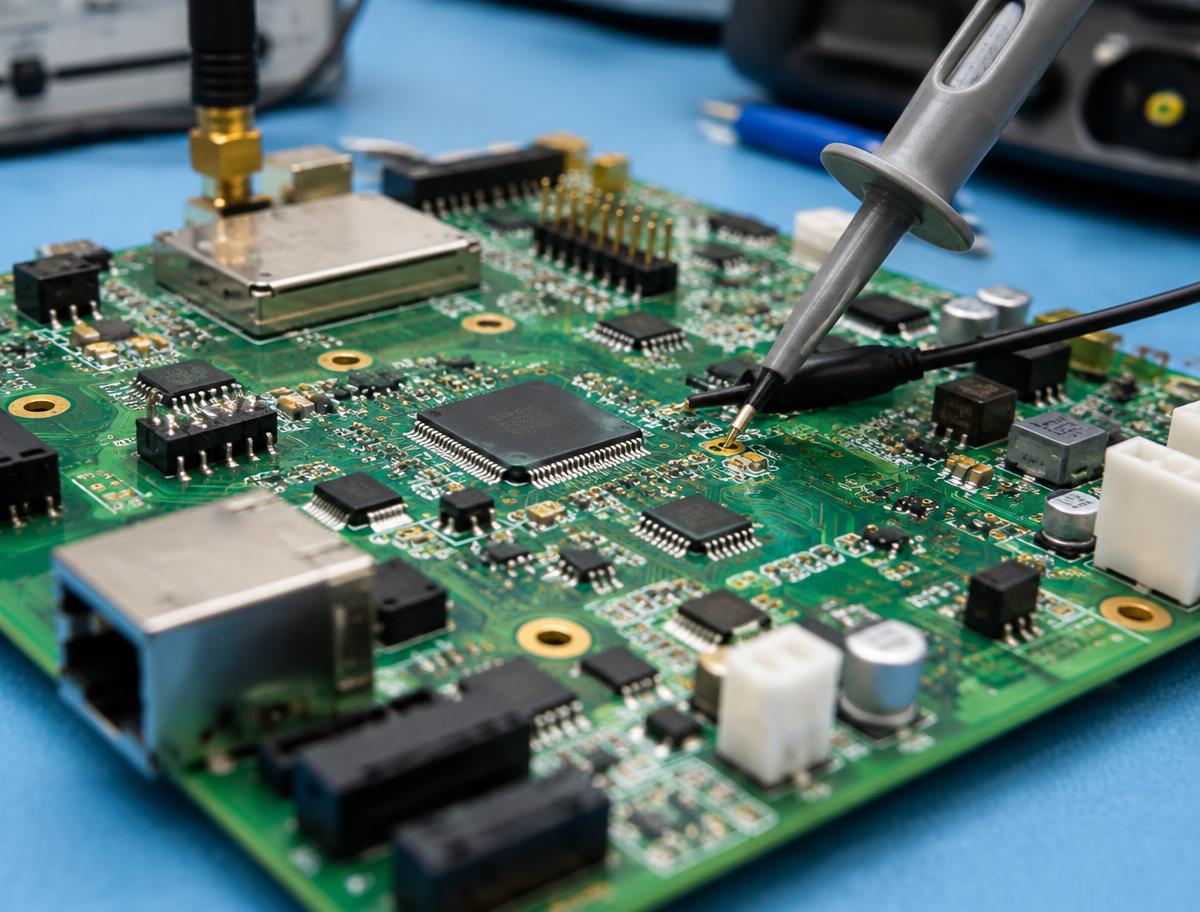
Industrial IoT hardware has to survive conditions that consumer electronics never face: wide temperature ranges, electrical noise, vibration, moisture and years of unattended operation. NETNOVA's hardware engineers design for those conditions from the first schematic. We cover the complete hardware design cycle: requirements analysis and component selection, schematic capture, multi-layer PCB layout with close attention to EMI/EMC, signal integrity and thermal performance, and power design for both mains-powered and battery-powered devices. Our designs include the industrial interfaces customers rely on, such as RS-485, M-Bus, Ethernet, digital and analog I/O, and cellular, LoRaWAN and NTN satellite radios. Prototypes are built and verified quickly, with design verification testing to confirm performance before money is committed to tooling and volume production. We optimize designs for manufacture (DFM) and test (DFT), choose components with long-term availability in mind, and hand over complete production documentation to the contract manufacturer. Whether you need a single board, a complete device with enclosure, or an independent review of existing hardware, our team delivers industrial-grade electronics designed with certification and mass production in mind.
Technologies
02What we do
How IoT Hardware & PCB Design works in practice
Schematic Design
Complete circuit design, from requirements to verified schematics.
PCB Layout
Multi-layer layout with EMI/EMC, thermal and signal-integrity control.
Prototyping
Rapid prototype builds and design verification testing.
Production Transfer
DFM/DFT optimization and full production documentation.
03Our development process
How we deliver IoT Hardware & PCB Design
- 01
Concept
Requirements analysis, feasibility study and technology exploration.
- 02
Architecture
End-to-end system architecture and technology selection.
- 03
Prototype
Rapid prototyping and proof of concept for hardware and firmware.
- 04
Validation
Lab and field validation, performance and reliability testing.
- 05
Pilot
Pilot deployment in real environments with operational feedback.
- 06
Deployment
Production, commissioning and handover.
- 07
Support
Long-term engineering support, updates and lifecycle management.
04Industries
Where we deploy it





Next step
Ready to start with IoT Hardware & PCB Design?
Book an R&D consultation. We'll discuss your requirements, constraints and timeline - and propose a phased engagement.